Sunday, August 03, 2014
Former Eagle Humphrey takes root in Canton
Humphrey was the defender who made the most of clubbing his opponent in the head with his fist and arm; so good, in fact, the NFL banned the move late into his now Hall-of-Fame career.
He spent only three seasons (1979-81) of his 14-year career with the Philadelphia Eagles, but they coincided with the franchise's renaissance under then-head coach Dick Vermeil, defensive coordinator Marion Campbell, GM Jim Murray and owner Leonard Tose.
Roughly midway through his speech, which was extended for more than a half hour, Humphrey paid tribute to the man who helped lead him to his first and only playoff berths as a professional.
"I met a man that had better work ethics than I did. I marveled at the way he went about his job. His name is Coach Dick Vermeil, Humphrey said, and then asked his former coach to stand to be recognized. "This man worked tirelessly to take a football team that perhaps may not have been a great football team, but he had a bunch of young guys who really got into what he was preaching, and we ended up going to a Super Bowl."
It was Humphrey whom Vermeil wrapped his arms around in a memorable clip from the final moments of the Eagles' January 1981 victory over the Dallas Cowboys to reach the Super Bowl for the first time. "Do you know where you're going?" the emotional ex-UCLA coach asked, before answering his own question: "You're going to the Super Bowl."
As a defensive end, Humphrey led a corps which finished, respectively, ninth (1979), first and first (1980-81) in fewest points allowed in the NFL. The Birds participated in six postseason contests in Humphrey's three years in Philadelphia, more in those three seasons than in the previous 20 years combined.
"When I got to Philadelphia, man, what a nice young team. Those guys accepted me. They brought me in. They were like sponges. They wanted to know what it was that I had been doing to get to All-Pro or make All-Pro. But in the morning before practice we would have meeting together, Dick Harrison, Carl Hairston, Charlie Johnson, Ken Clark. We would go in those meetings and that was before the coach got there. Man, what great work we got in."
The 23rd member of the Hall of Fame to have suited up at one time for the Philadelphia Eagles, you can read the full transcript of Humphrey's epic speech by hitting the link.
Wednesday, February 12, 2014
Dineen takes place in AHL Hall of Fame
He was the ninth head coach in franchise history and the eighth man to hold the post when tabbed to take over for Paul Holmgren in December of 1991.
Nonetheless, his legacy in the American Hockey League as a player, and most importantly, as a coach, was cemented on Wednesday as he joined the ranks of the illustrious in that league's Hall of Fame.
Dineen, born in Quebec to an Anglophone family, first arrived in the AHL in 1958, and played for four teams over six seasons (Buffalo, Cleveland, Rochester, Quebec) while totaling 132 goals and 139 assists in 391 games.
His greatest legacy was created in Glens Falls. Though only the home for the Phantoms for five years, and until the end of this season, the town is still awash in the glow from 20 years of success as a Red Wings affiliate. Dineen led the club from 1983 to '89, and was responsible for leading the club to the third and fourth banners in the above picture, ultimately winning 246 games and a pair of Pieri Awards (1985 and '86) as the top coach in the AHL.
Dineen's 1986 Calder Cup winners were a study in absolute contract from their parent club. The Detroit Red Wings went 17-57-6, and allowed more than 400 goals in 85-86, the nadir of a franchise that still hadn't recovered from Gordie Howe's retirement 15 years earlier. The junior Wings, though, finished atop the Northern Division with a 41-31-8 record, then took down Fredericton, Moncton and Hershey to win it all.
One more championship followed three years later. In '89, the grandfatherly leader benched two of his top players when facing an 0-3 deficit to Hershey in the semifinals. The Wings went on to win the next four games and then whipped New Haven for the title. It was a perfect exit for who, by then, was a permanent fixture in Glens Falls.
Dineen made the jump to the NHL after that season, eventually landing with the Orange and Black on December 5, 1991. He holds the distinction of being the only man in team history to finish at .500, going 60-60-20, will go down in history as Eric Lindros' first NHL coach, and also had the pleasure for the only time in Flyers' annals to coach while one of his sons -- Kevin, who now leads the Canadian women's program. -- played a significant role on the club.
Others enshrined on Wednesday were Al MacNeil, a standout defenseman and three-time Calder winner with Nova Scotia when it served as primary affiliate for the Montreal Canadiens; goaltender and four-time winner Bob Perreault; defenseman John Slaney, who spent more than a decade and a half as an AHL blueliner and finished his North American playing career with the Phantoms from 2001-07.
Tuesday, November 12, 2013
Shero's day finally comes with Hall of Fame enshrinement
Unfortunately, sometimes good things come to those who were not blessed with the time to wait.
On Monday night, Fred Shero -- still the most successful head coach in Philadelphia Flyers history -- was finally enshrined into the Hockey Hall of Fame along with the rest of the Class of 2013.
A man with so many one-liners, and of course those cryptic messages left on locker room blackboards during the glory days of the Broad Street Bullies, might have had to steal a line from Groucho Marx if he were on this Earthly plane and attended the event in Toronto.
But Shero, who passed away from stomach cancer almost 23 years ago, had some good company throughout the last week to speak on his behalf for the long-overdue honor.
First, his son, GM Ray Shero of the Pittsburgh Penguins, who related last week about the call to the Hall: "I really wasn't expecting it. I was down at the American Hockey League meetings in Hilton Head. I was on the beach, playing football with my kids and the call came. Really exiciting and (he's) going in with a great class. When it finally happens...it's really great to hear."
In front of several former Flyers among the dignitaries in the Great Hall he added: "He was a complex man, yet a very simple one. He was a loner, yet he loved an audience. He was shy, yet he was quoted extensively. He never backed down from a fight; yet he had no enemies. He coached those Flyers teams who took no prisoners, just a pair of Stanley Cup championships in '74 and '75."
His captain Bob Clarke also feted his former coach, whom Shero described memorably in the club's 25th Anniversary video as a "dream dressed in work clothes."
Read more at http://www.philly.com/philly/sports/flyers/20131110_Shero_s_Hall_of_Fame_path_one_of_innovation.html#FRDIBFrq7EmwkBmQ.99
Then, it was one of his stalwart defensemen, who credited the Canadian-born and American-trained Shero with bringing the ways of the so-called Evil Empire to North America.
"He went to Russia and tapped into their great system of hockey and brought it to the NHL," said Joe Watson, a long-time Flyers employee who was one of the original players taken in the 1967 expansion draft. "He implemented among other things, off-ice training. He hired a strength coach who made us stronger and more explosive, and more aware of our diets, which wasn't prominent in the early 1970's."
Read more at http://www.philly.com/philly/sports/flyers/20131110_Shero_s_Hall_of_Fame_path_one_of_innovation.html#FRDIBFrq7EmwkBmQ.99
For a moment, let's forget about his storied tenure in Philadelphia.
The native of Winnipeg coached 11 seasons in four different leagues before he even reached the NHL, winning four championships (St. Paul IHL, 1960, '61; Buffalo Bisons AHL, 1970; Omaha Knights, CHL 1971) and losing in three other league finals. In that time, only two of his teams finished with records below .500 (Moose Jaw in 1958-59 and St. Paul in 1962-63). He also won top coaching honors in the AHL and CHL in back-to-back seasons before coming here.
Yet, Shero was underestimated in the world's top league once he arrived in 1971 to take over a struggling franchise trying to emerge from the shadow of expansion.
Shero might have been on the winding path to a Hall of Fame coaching career, but he might not be so pleased with Ray's foray into the hockey world. "He didn't want me to be in hockey. He actually pushed me to become a doctor or lawyer which I never thought was such a great idea. He always pushed me and my brother, Jean-Paul towards education."
The younger Shero admitted to his team's website that he was a Flyers fan when his father coached in Philadelphia, a Rangers fan when he jumped ship to New York, became a Flyers fan once again when the elder Shero was welcomed back to the Flyers as a senior advisor, but now given his role, he's a Penguins fan.
That didn't diminish the impact on Monday's honor, where father Fred took his rightful place along with Clarke, Bill Barber, Bernie Parent, Keith Allen, Ed Snider and Gene Hart -- all integral parts of the first Renaissance in team history.
"I think it's going to be a pretty special, emotional experience," Shero added. "But I think it's more about my dad's relationships with his players … his being inducted validates some of his teams, because it was about the players and this is about people that gave him the opportunity, Ed Snider and Keith, after 13 years in the minors. They were the only people to take a chance on him to coach in the National Hockey League."
Shero remains the winningest coach in Flyers history, and still holds the record for most games coached in franchise lore. From 1971-78, he helped the franchise win an East Division title and three Patrick Division crowns along with as many Campbell Bowls and one victory over the Soviet Central Red Army team. All told, he finished 308-151-95 in the regular season and 48-35 in the postseason.
Thursday, October 10, 2013
Former Flyers coach Dineen gains AHL HOF nod
“There’s not many places I didn’t stop,” Dineen said in obvious understatement.
Dineen is best known in hockey circles for his time spent in Glens Falls as bench boss for Adirondack's original AHL club, the primary affiliate of the Detroit Red Wings. From 1983 to 1989, the Quebec native led the Baby Wings, winning Calder Cups in 1986 -- while the parent club won an NHL-worst 17 games -- and again in 1989. He also took home the Pieri Award for the league's top coach in both 1985 and '86.
“We saw a lot of kids go up to Detroit from here. And they went and never came back. That’s the ultimate. It was always a good feeling to see a player that you coached get an opportunity to go up, and you hope not to see them come back," he added. "That’s what the players are here for. It’s not the ideal situation for the coach, but it’s very satisfying.”
He had previously been elected to the Adirondack Hockey Hall of Fame back in 2010.
The 81-year-old also had the distinction of being head coach in the World Hockey Association with the Houston Aeros (1972-78) and New England Whalers (1978-79) -- both of which featured Gordie Howe and his sons Mark and Marty.
Dineen played in the AHL between 1958 and 1964 for Buffalo, Cleveland, Rochester and the Quebec Aces before they became the Flyers' chief affiliate.
“I love the American League,” Dineen said. “I think it’s a good development league for kids, very competitive, very physical. Certainly a good way to develop your skills.”
In Philadelphia Dineen took over for Paul Holmgren on December 5, 1991 and earned a rare distinction as being the only Flyers head coach to have been the boss of his son. Kevin Dineen had been acquired from the Hartford Whalers weeks before the coaching chance. The elder Dineen finished his Philadelphia tenure with a neat 60-60-20 record but did not reach the playoffs.
John Slaney, who skated with the Philadelphia Phantoms from 2001 to '07 and was a key member on the blue line for the 2005 Calder Cup champions, was also selected. Slaney, a native of Newfoundland, played parts of 14 years in the AHL for multiple clubs, also spent five games with the Flyers split over two seasons.
Read on for the full release and bios of all inductees.
* Quotes courtesy of Diana C. Nearhos and the Post Star
Tuesday, December 04, 2012
Hagen wins Spink Award for 2013
The graduate of Ohio University began covering the Phillies in 1987 and moved up to a columnist's role in 2007 before taking his current role with MLB.com. Other former Philadelphia baseball beat writers to be honored were Bill Conlin (2011), Bus Saidt (1992), Ray Kelly (1989) and Allen Lewis (1981).
Saturday, November 19, 2011
Flyers to retire Howe's #2
Mark Howe will join the ranks of the illustrious in Flyers history, as he will have his #2 retired by the club prior to their March 6 game against the Detroit Red Wings, according to multiple sources.
Makes sense, right?
It will close a gap of 22 almost years since the last number was raised to the roof, then at the Spectrum, when Bill Barber saw his #7 elevated early in the 1990-91 season.
Howe didn’t win a Stanley Cup during his 10-season tenure in Philadelphia, and he’ll be the first player so honored that didn’t win a title here, but so what?
His influence on the team itself was immeasurable — the ultimate barometer. His peak years as an NHL player coincided with the Flyers’ rise once again to the league’s elite, and, sadly, his decline due to debilitating back issues was a contributing factor to the Flyers’ slide into their five-year dark period in the early 1990′s.
It shouldn’t come as much of a shock that Howe’s number is up, given chairman Ed Snider’s quote last week:
“If a guy’s good enough for the Hall of Fame, he’s good enough to have his number retired.”
So let it be spoken, so let it be done.
I don’t think Ed Van Impe will have much of an issue with this, do you? Or Derian Hatcher, or Dmitri Yushkevich? Not a peep out of Frantisek Kucera, either. Bob Dailey might flap his cape in agreement.
After all, this was a man who, in the immortal words of Jay Greenberg in Full Spectrum, “kissed the Flyer defense and made it all better” upon his acquisition from the Hartford Whalers in 1982.
In an era where offense reigned, Howe posted six consecutive seasons of 10-or-more goals, 50-or-more points and a plus-minus of at least plus-20 from 1982-88. Twice he scored at least 20.
His 1985-86 campaign is now the stuff of legend: 24 goals, 58 assists, and an astronomical league-high plus-85 in 75 games in a year where the Flyers reeled from the death of Pelle Lindbergh. Howe was the beneficiary of a four-defenseman system head coach Mike Keenan rolled with for the majority of the year and Howe rose to the challenge.
All told, in 594 regular-season games, the 5-foot-11, 190-pounder totaled 138 goals and 480 points with a plus-349. Over 82 playoff appearances, he racked up eight goals and 53 points with a plus-43. In the club’s three long playoff runs (’85, ’87, ’89) in his tenure here, he posted a double-digit positive plus/minus.
After three years of progressively troubling injury which forced him out of the lineup for 139 of a possible 240 games, Howe was afforded the chance to return to his hometown. He spent the final three years as a veteran presence on the blue line with the Red Wings, finally hanging up the skates after the Wings were swept by the Devils in the ’95 Cup Finals.
Howe was inducted into Hockey's Hall of Fame, alongside his father Gordie, last Monday in Toronto.Tuesday, November 15, 2011
Howe enters Hall of Fame on humbling notes
by Bob HerpenPhanatic Magazine
You might think that Mark Howe, the newest former Philadelphia Flyer to be enshrined in the Hockey Hall of Fame, might introduce the meat of his speech by dedicating a few words to his family, his former teammates, or his famous father.
But the 56-year-old kicked off his time at the podium in downtown Toronto last night by addressing a situation that has been largely ignored: that of compensation for the victims of the Lokomotiv Yaroslavl air tragedy, which occurred on September 7 and claimed the life of the club’s head coach and Howe’s former teammate, Brad McCrimmon.
“I hope the victims of this terrible tragedy receive full compensation for their losses, which is not the case at this time,” Howe began. “I find this morally upsetting. The families have lost their loved ones, they do not have to suffer financially as well. The hockey world should do all it can to make it right.”
Mark then introduced Maureen McCrimmon, Brad’s widow, who was seated near the front of the crowd.
“It makes my evening complete,” he added.
As the primary defensive pairing, Howe and McCrimmon were the bedrocks of the Flyers’ renaissance in the mid-1980′s under Mike Keenan, a time which saw the club vault to elite status once again after a brief downturn.
Howe racked up a plus-85 and McCrimmon a plus-83 during the difficult 1985-86 campaign, one in which the son of Mr. Hockey posted career numbers of 24 goals and 82 points. But life wasn’t all rosy for the most talented of Hockey’s First Family as the Flyers rose to prominence, and Howe made mention of that shortly after paying tribute to his former partner.
“Although I wanted to slash him a few times, I want to thank (Mike) Keenan for helping me to raise my bar.”
Under the man called Iron Mike, Howe was a three-time finalist for the Norris Trophy which honors the league’s best defenseman — but ultimately cast aside in favor of Edmonton’s Paul Coffey and Boston’s Ray Bourque, two contemporaries who simply put up more points each time.
But those were the peak years, before McCrimmon was traded to Calgary and injuries to his back severely cut into his playing time. When he arrived in Philadelphia in 1982, Howe was paired with pugilist Glen Cochrane, for whom fighting was more of a livelihood than learning how to play in his own zone.
And when McCrimmon left, the stork-like Kjell Samuelsson slid into place and the time it took for both men to acclimate to each other sadly occurred as the franchise endured its slide into mediocrity. But Howe honored them all, in the same breath, as part of his Philadelphia hockey experience.
Howe then paid tribute to a person responsible for his success that has not been as well known — his ex-wife, with whom he had three children: Travis, Azia and Owen.
“Although (she and) I have been separated for a number of years now, I would be remised not to thank Ginger for bringing the three kids into his world and the commitment she made to them as a mother,” he intoned.
After moving on to address his brother Marty, and joking that he was glad his other brother Murray became a doctor so he could spend his life repairing the damage that six combined decades of hockey did to their bodies, Howe ended with a poignant tribute to his mother, Colleen.
The woman called Mrs. Hockey had been suffering from a form of dementia for several years and passed away early in 2009.
And of course, the final words came as a tribute to his famous father, Gordie Howe, who had been inducted into the Hall of Fame back in 1972.
“I guess there is one person left to thank in this building,” Howe said, looking a bit nervous as he momentarily looked up from his script. “I’m not going to thank you for being my line-mate for six years and I’m not going to thank you for elbowing the guy who may have taken a dirty shot at me. I’m not going to thank you for being the greatest hockey player ever. I want to thank you for being the husband, father and grandfather you are. You are the role model that led my life. I’m so proud to call you my dad.”
Mark revealed that Gordie said he wished just for one game he would have worn his famous Red Wings jersey — but only decided to tell him right after he retired from the Wings following the 1995 Stanley Cup Finals. He finally honored that request tonight, pulling the road red No. 9 sweater over his tuxedo to a standing ovation before leaving.
The night fittingly began with Howe’s induction, as he had waited the longest of the four players to be honored.
A native of Detroit and Silver medal winner with Team USA in 1972, Howe’s career ended more than 16 years ago, while Doug Gilmour’s last season was 2003, Joe Nieuwendyk called it quits in 2007 and Ed Belfour finally hung up the pads in 2008.
It was also fitting that Flyers captain and teammate Dave Poulin — who was in the audience and whom the camera panned toward on several occasions during Howe’s speech — gave the televised and taped introduction which preceded Howe’s words.
Also in attendance were most of the Flyers’ Hockey Hall of Fame enshrinees. Bob Clarke (1987), Bill Barber (1990) and Ed Snider (1988) sat conspicuously near the front of the stage. Only absent were Keith Allen (1992) and Bernie Parent (1984). Hart died in 1999.
Tuesday, June 28, 2011
Howe heads to Hall of Fame
Special to the Phanatic
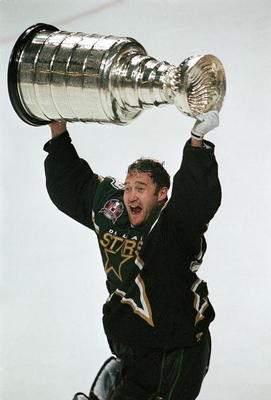
Former Dallas Stars teammates Joe Nieuwendyk and Ed Belfour highlight the 2011 Hockey Hall of Fame class, which also included former Flyers defenseman Mark Howe.
Son of the famous Gordie Howe, Mark lived up to his fathers name in a professional career that spanned two leagues and 22 seasons.
"I was elated to have this dream come true given that it is a tremendous honor just to have my name mentioned with the upper echelon of hockey," said Howe. "To actually have my name in the Hall of Fame with my Dad will mean so much to my family."
He began play with the Houston Aeros of the World Hockey Association alongside his father and brother Marty. Playing left wing on the team, he was honored as the league's top rookie in 1974 and helped the nascent club win two Avco Cups.
By the start of the 1976-77 season he moved to defense and, along with his father and brother, went to the New England Whalers of the WHA before the 1977-78 season.
When the WHA and NHL merged in 1979, the Whalers were welcomed into the league as the Hartford Whalers and Howe continued to play there.
Howe recovered from a serious internal injury at the end of the 1980-81 season, which prompted the league to redesign its nets after he suffered a serious leg gash from crashing through the center portion. After one more year with the Whalers, he was shipped to Philadelphia in a three-team trade prior to the 1982-83 campaign that included sending Ken Linseman to Edmonton.
Immediately inserted as a top-line defender, he was the anchor of a defensive squad that saw the team go to the Stanley Cup Finals twice while he was there (1985, 1987), losing both times to the Gretzky-led Edmonton Oilers.
The three-time Norris Trophy finalist spent 10 seasons in Philadelphia and had several productive seasons, including the 1985-86 campaign that saw him score 24 goals, notch 58 assists and finish with a league-best plus-85. He lost out the Norris Trophy that year to Paul Coffey, who totaled 138 points that season.
Signed by the Red Wings as a free agent in 1992 after three years battling debilitating back issues, he spent the next three seasons there and retired following the shortened 1995 campaign after the Red Wings were swept by the New Jersey Devils.
Currently the Red Wings' director of pro scouting, he was elected to the United State Hockey Hall of Fame in 2003.
Howe, who still maintains a residence in Ocean City, New Jersey, finished his NHL career playing 929 games, totaling 197 goals and 545 assists along with 10 goals and 51 assists in 101 playoff games. Over six WHA seasons, he racked up an impressive 208 goals and 504 points in 426 contests.
To get the phone call today took my breath away," Howe said. "I never expected that call. I don't consider myself in the class of the Gordie Howes, Wayne Gretzkys and Bobby Orrs. It means the world to me. When I was trying to call dad and I called my children, I began to tear up. It is just a tremendous honor."
Along with the Nieuwendyk and Belfour, who won a Stanley Cup together in 1999 with Dallas, Doug Gilmour will also be inducted into the Hall of Fame on November 14.
The current general manager of the Stars, Nieuwendyk began his career in Calgary where he won the Calder Trophy as the league's top rookie in 1988. He notched 51 goals that season and is one of just five players (Mike Bossy, Wayne Gretzky, Teemu Selanne and Alex Ovechkin) to record at least 50 goals in their rookie season.
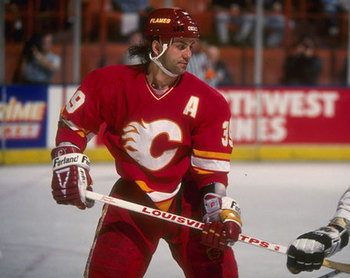
The next season saw him record 51 goals again and he hoisted his first Stanley Cup when the Flames defeated the Montreal Canadiens in six games.
He was traded to Dallas in December of 1995 after a contract holdout in exchange for the rights to current Flame Jarome Iginla. The 1998-99 season saw the Stars win the Stanley Cup in six games over Buffalo and Nieuwendyk win the Conn Smythe Trophy as the most valuable player in the playoffs.
Near the end of the 2001-02 campaign he was traded to New Jersey and won a gold medal with Team Canada in the 2002 Olympics. The following season saw him win his third Stanley Cup with a third different team when the Devils defeated the Ducks in seven games.
Nieuwendyk then went on to spend time with Toronto and Florida and decided to retire from the game on December 6, 2006. He totaled 564 goals and 562 assists over 1,257 games and 66 goals and 50 assists in 158 playoff games.
"Every player does their best year after year and strives to play at a very high level," said Nieuwendyk. "I truly love the game and love to compete, and I'm pleased to be honored by the Hockey Hall of Fame."
Known as "The Eagle", Belfour had a career that spanned 17 seasons and began with a Calder and Vezina Trophy winning season in Chicago.
"It is hard to put into words what this means to me," said Belfour. "I would like to thank all of my teammates and people along the way who helped me achieve my hockey dreams."
Recalled by the Blackhawks late in the 1989-90 season, he became the full-time goalie the next season and went 43-19-7 with four shutouts and a 2.47 goals- against average in 74 games.
That dominating performance won him the best rookie trophy, best goaltender trophy and the William M. Jennings Trophy for the fewest team goals-against average. Also, he was nominated for the Hart Trophy as the league's most valuable player, but lost to Brett Hull of the St. Louis Blues.
Next season he guided the Blackhawks to the Stanley Cup Finals, but the team was swept by Mario Lemieux and the Pittsburgh Penguins.
He spent the next four-plus seasons with Chicago, winning another Vezina Trophy in 1993, but was traded to San Jose halfway through the 1996-97 season.
Signed by the Stars as a free agent on July 2, 1997, he backstopped the team to his first and only Stanley Cup championship in 1999. He outdueled former teammate and six-time Vezina winner Dominik Hasek as he went 16-7 with a 1.67 GAA and three shutouts.
Belfour won a Gold Medal with Team Canada in 2002 and, following the 2001-02 season, signed with the Toronto Maple Leafs where he spent the next three seasons, setting a franchise-record with 37 wins in the 2002-03 season.
He played for a season with Florida after signing with the team on July 25, 2006 and that was his final campaign in the NHL as he went to play in Sweden after signing with a club there on August 27, 2007.
Over his career in the NHL he appeared in 963 games and went 484-320-111-14 with 76 shutouts, a 2.50 GAA and .906 save percentage.
Known as a small, scrappy player throughout his career, Gilmour won a Stanley Cup with the Flames in 1989 along with Nieuwendyk.
"This is an overwhelming honor and one that makes me reflect back on the teammates and coaches I have had over the years," said Gilmour. "Larry Mavety, who gave me a chance in Tier II hockey and Gord Wood who drafted me into Junior at Cornwall, are two people who were instrumental in helping me establish myself as a player."
He began his career in St. Louis during the 1983-84 season and stayed there until being traded to Calgary prior to the 1988-89 campaign, finishing that season with 85 points in 72 games and scored the game-winning goal against Patrick Roy in the deciding Game 6 of the Stanley Cup Finals against Montreal.
On January 2, 1992, Toronto acquired Gilmour from Calgary in a 10-player deal that is seen as one of the most lopsided in the history of the NHL.
The next season, he set a franchise record with a 127-point season and thanks to his efforts he won the Selke Trophy as the best defensive forward and was a runner-up for the Hart Trophy.
Gilmour led the team to the Campbell Conference Finals, but was unable to lift them into the Stanley Cup Finals as the Wayne Gretzky-led Los Angeles Kings eliminated the Maple Leafs in front of the Toronto crowd in Game 7. Gilmour finished the playoffs that year with 35 points in 21 games.
He eclipsed the 100-point mark the next season with 111 and again led the Maple Leafs to the conference finals, but again was unable to push them over the top in a series loss to Vancouver.
Traded to New Jersey during the 1996-97 campaign, he spent time with Chicago, Buffalo and Montreal.
He was sent to Toronto from Montreal at the trade deadline in 2003, but his first game saw him collide with Calgary's Dave Lowry, tearing his ACL and ending his career.
Over 1,474 games in the NHL, Gilmour totaled 450 goals and 964 assists and added 60 goals and 128 assists in 182 playoff games.
Toronto retired his No. 93 on January 31, 2009, the 17th Leaf honored that way.
Tuesday, January 08, 2008
And this year's winners are...

The Phanatic Magazine
Every year I wax poetic about how the writers have done such a bad job with the privilege they’ve been handed by voting for the Hall of Fame...this year won’t be any different.
Whether it’s Bill Conlin, who won’t vote for any first ballot Hall of Famers, or the other seven morons that also thought Cal wasn’t good enough last year, or whether it’s the three idiots that actually think Dante Bichette belongs in Cooperstown, it’s clear that more tinkering needs to be done to the voting system.
The Vets committee didn’t vote someone in for two years and they couldn’t change the process fast enough. AND SOMEHOW MARVIN MILLER STILL ISN’T IN.
However, this year there is no clear-cut favorite. There is no definite inductee. There are many retreads and one or two will get in as a product of a weak ballot. The criteria to become a Hall of Famer shouldn’t change depending on who else is eligible to receive votes.
Writers get to vote for as many as 10 candidates and whoever gets 75% of the vote will get enshrined in Cooperstown on July 27.
One thing that must be written is that no one ever becomes more of a Hall of Famer; they either deserve to be in or not. Dave Concepción is on the ballot for the 15th and final year. What makes his candidacy better this year than any of the previous 14? That being said players shouldn’t be on the ballot that long. Kick players out after seven years. They get seven shots before moving on and taking their chances with the Veteran’s Committee.
The next step is to get a better vetting process. Guys like Dante Bichette and new additions on this year’s ballot, including Todd Stottlemyer, Travis Fryman, Brady Anderson, Chuck Finley, etc., should never see the ballot. They are clearly not Hall-worthy. (Rod Beck was going to be left off the ballot, even though he was eligible, but was put on after his unfortunate passing.)
The only newcomer of the 11 that were added to this year’s ballot that has a shot of collecting a substantial amount of votes is Tim Raines. But the fact that he refused to hang up the cleats until a few years too late will hurt his chances.
Andre Dawson was on Jim Rome’s ESPN show on Monday and he said he didn’t think the younger writers did enough homework to warrant a vote. Make the writers pass some sort of criteria that shows they are doing the appropriate amount of work before casting a ballot. I know that you have to be part of the Writer’s Association for at least 10 years, but that’s not good enough, especially when Bobby Bonilla got two votes.
Dawson is probably right and it’s a shame. There are too many writers that probably only remember the end of Dawson’s career, and that’s what they will judge him on.
Here is who I would vote for on my ballot, if I had one:
Rich “Goose” Gossage – Was a dominant relief pitcher in the 70’s and helped the Yankees get two titles. He made nine All-Star teams, led the league in saves three times (And he did this when the closer position wasn’t as defined. Gossage led the league by finishing 55 games in 1978, but he only recorded 27 saves. He was consistently counted for more than an inning. No reliever was more intimidating than Gossage during his time.

Jim Rice – For 12 years Rice was the best player in the American League. From 1975 to 1986 Rice led the league in home runs, extra-base hits, RBIs, slugging, and runs. It’s time for writers to get off Rice’s back for not being a friendly guy. He deserves to be in and he’s running out of time. He’s looking to become the first guy since Red Ruffing in 1967 to be enshrined in his 14th year or later.
Jack Morris – He leads the 80s with 162 wins, 133 complete games, 332 starts and
2,443 innings. He is the only pitcher to lead a decade in wins and not be in the Hall. He has four World Series rings; look it up; he also got one with the 1993 Blue Jays.) Morris has a trio of 20-win seasons, 11 campaigns with 200-plus innings and three 200-strikeout seasons. He’s also tied for second with 14 Opening Day starts, joining Steve Carlton, Randy Johnson, Walter Johnson and Cy Young for second-most ever, and a pair behind Tom Seaver (16). He was 7-4 with a 3.80 earned run average in 13 postseason starts with five complete games and 64 strikeouts in just under 93 innings pitched, including one of the greatest postseason pitching performances with a 1-0, 10-inning victory over the Braves in the seventh game of the 91 Series.
Andre Dawson – He has 438 home runs, a Rookie of the Year, eight Gold Gloves, an MVP (on a last-place team) and finished second twice. If he got in he would have the lowest on-base percentage (.323) of any member but he was one of the best players of the 80s. He was right there with Mike Schmidt and George Brett. He is one of only six players in major league history with more than 300 homers and 300 steals, including Barry and Bobby Bonds, Willie Mays, Reggie Sanders and Steve Finley. “The Hawk” is also one of three players with 400 home runs and 300 stolen bases club, along with the Home Run King and his godfather.Here are the guys that just missed getting my vote
Bert Blyleven – His 287 wins, 3,701 strikeouts, and 60 shutouts are impressive numbers but he wasn’t dominant enough. He had longevity on a number of bad teams. He only won 20 games once, made only two All-Star teams, and only received Cy Young votes in four seasons.
Tommy John – See Bert Blyleven. I liked Blyleven until I compared him to Tommy John, and the numbers are too similar. John had 288 wins with three 20-win campaigns, 46 shutouts, and 2,245 whiffs. Would we be having this conversation if hadn't had a surgery named after himself.
Tim Raines – “Rock” was a seven-time All-Star (1981-87), while leading the National League in stolen bases four times and runs twice. He won the 1986 NL batting title (.334), and hit .300 or higher in eight seasons. He has six 100-run seasons, and 16 campaigns of 10 or more stolen bases. Raines is the NL record-holder for highest stolen-base percentage (.857) with at least 300 steals, and the MLB record-holder for highest stolen-base percentage (.847) with at least 300 attempts. He ranks fifth all-time in stolen bases (808) and 45th all-time in runs (1,571). He should get in...but not this year.
Don Mattingly – Injuries sapped of what could’ve been a phenomenal career. He was a fantastic defender with nine Gold Gloves, an MVP, a six-time All Star, and he has a share of the MLB record with a HR in eight consecutive games and the most grand slams (six) in a season.
Lee Smith – He held the record for most saves because he held on to his career for soooooooo long.